In Google Search Console's "Page indexing" report, "Submitted and indexed" is the one status everyone hopes to see. Amid a list built to flag problems (crawled not indexed, duplicates, server errors), it's the green line: the page is in the index, discovered via the sitemap, nothing to fix.
That green says less than it seems, though. Is an indexed page therefore ranking, visited by Googlebot, visible in results? Did Google keep it under the canonical you intended, or under a different one? And this status, captured today, will it still hold in three months?
The one green light in the report is also the one we look at least. That's exactly where the blind spots sit.
What "Submitted and indexed" actually means
"Submitted and indexed" means two things at once: the page is in Google's index, and Google discovered it through a URL present in a sitemap you submitted. The matching inspection verdict is "URL is on Google." It's the only status in the report that calls for no fix at all.
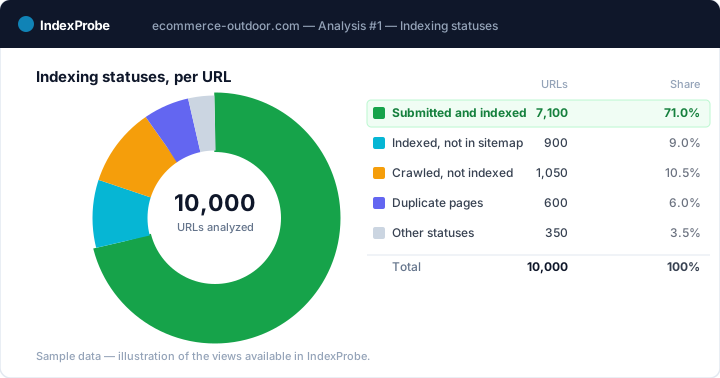
Two conditions, then, packed into the same label. The first, "indexed", concerns the page's standing in the index. The second, "submitted", concerns the discovery source: Google found this URL by reading one of your sitemaps. That's what sets this status apart from its cousin "Indexed, not submitted in sitemap", where the page is just as indexed, but found some other way (through a link, through an earlier crawl). More on that further down, because the confusion between the two runs deep.
For now, hold on to the essentials: "Submitted and indexed" is Google confirming the page is in its index and that it was found where you expected. All is well. The question is how far that "all is well" really goes.
Indexed isn't ranking: why green doesn't guarantee traffic
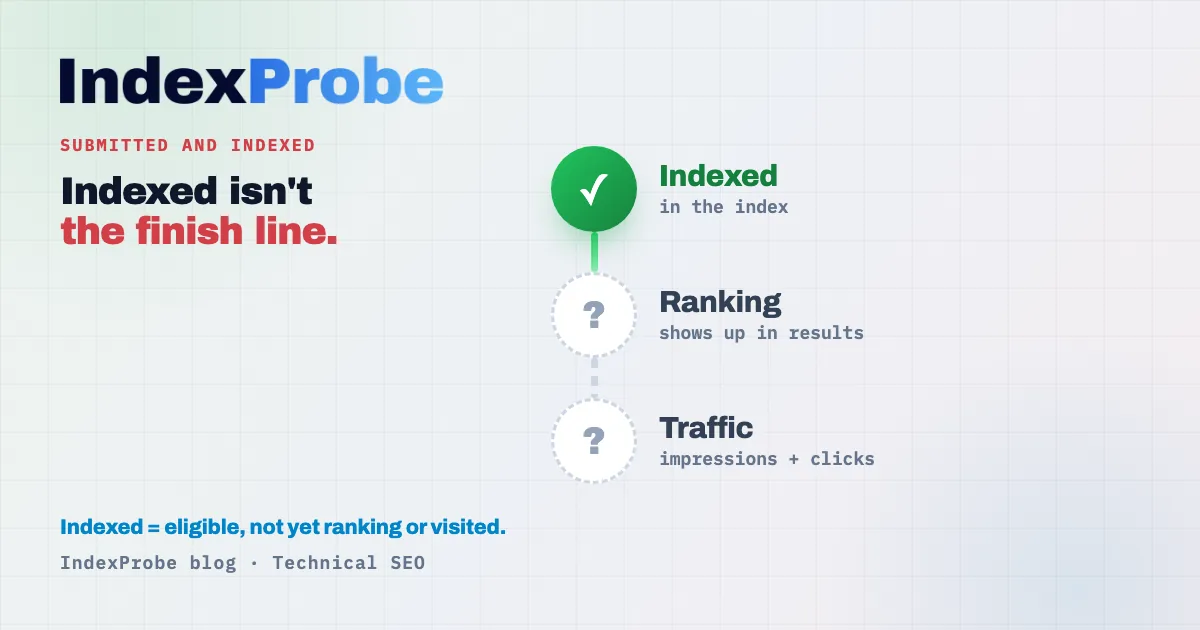
An indexed page is eligible to appear in search results, nothing more. Being in the index is an entry condition, not a promise of visibility. A page can be perfectly indexed and surface for no useful query, for lack of relevance, signals, or demand for its content. Google says as much plainly.
"Just because a page is indexed doesn't guarantee that it will show up in your search results." — Google Search Central documentation
Three levels are worth keeping apart, because we tend to merge them the moment we see green:
- Indexed: the page is recorded in Google's index. That's what "Submitted and indexed" confirms.
- Eligible: the page can, technically, appear for queries. Indexing opens that eligibility without guaranteeing it on any specific query.
- Ranking: the page actually positions, on given queries, at spots that earn impressions and clicks.
The "Submitted and indexed" status certifies the first level. It says nothing about the third. That's the whole misunderstanding: we close the report reassured, while an indexed page that earns no impression and no click is working for no one. The indexing report isn't where you measure that. You have to cross this status with other data to know whether the page truly exists in users' eyes.
A healthy page still deserves a check: 3 controls
A "Submitted and indexed" page has nothing to fix, but it still needs watching. Three controls are enough to turn a passive green light into useful information: did Google keep the right canonical, is the page earning impressions and clicks, and is its last crawl recent. Not one of the three shows up in the status alone.
Did Google keep your canonical?
"Submitted and indexed" confirms the page is in the index, not that it sits there under the URL you intended. Google always keeps one canonical per piece of content. Most often, it's the one you declared. But a page can be indexed under a canonical different from yours without that green status raising a flag, because the canonical arbitration plays out elsewhere in Search Console. To check it, you compare the declared canonical against the one Google kept, URL by URL. When the two diverge, you tip into another status: Duplicate, Google chose different canonical than user.
Is the page getting impressions and clicks?
This is the control the indexing report will never run for you. An indexed page should, in time, earn impressions on the queries it targets. If a strategic page has been "Submitted and indexed" for weeks yet sits at zero impressions, indexing succeeded and positioning failed. The problem isn't in the indexing report, it's in the Performance report. Crossing the two is the only way to know whether the green produces traffic or just decorates a table.
Is the last crawl recent?
URL inspection reflects "the last crawled version", not a live state of the page. The status you read is a snapshot, dated to Googlebot's last visit. A page can show "Submitted and indexed" while its last crawl goes back several months: the status describes what Google saw at that point. If you've changed the page since, or if it has degraded, the green doesn't reflect it yet. The date of the last crawl is therefore a first-order piece of information for judging how fresh this verdict is.
| Check | What the status doesn't tell you | Where to see it (GSC one-at-a-time → at scale) |
|---|---|---|
| Kept canonical | Which URL the page is actually indexed under | URL inspection, "Google-selected canonical" line → compare declared vs. kept canonical across the whole list |
| Impressions and clicks | Whether the page positions and earns traffic | Performance report, page by page → cross Performance with indexing on the list |
| Crawl freshness | How recent this verdict is | URL inspection, "Last crawl" → date of Googlebot's last visit on each URL |
💡 Running these three checks on hundreds of pages, one by one? IndexProbe inspects your URL list via the Search Console API and returns, per page, the official indexing verdict and Google-selected canonical, dated to the last visit. Try IndexProbe in early access →
These three checks mean comparing neighbouring labels without mixing them up. And the first trap is precisely the word "submitted".
"Submitted and indexed" vs neighbouring labels: don't mix them up
"Submitted and indexed" stands apart from its neighbours on two axes: is the page in the index, and how did Google discover it. The label "Indexed, not submitted in sitemap" describes the same indexing success with a different discovery source. "Discovered, currently not indexed", by contrast, describes a page Google knows about but hasn't placed in the index.
| "Submitted and indexed" | "Indexed, not submitted in sitemap" | "Discovered, currently not indexed" | |
|---|---|---|---|
| In the index? | Yes | Yes | No |
| Discovery source | A URL from a submitted sitemap | Another route (link, earlier crawl) | Known, not yet crawled |
| Action | Monitor, nothing to fix | Add the URL to the sitemap if the page matters | Check links, quality, crawl budget |
Mind a nuance that trips up plenty of people: "Indexed, not submitted in sitemap" is not one of the indexing report's statuses in the same way as "Submitted and indexed" or Discovered, currently not indexed. It's a label Search Console uses to describe a page's discovery source (the coverageState from the inspection API), not a "sibling" status that would warrant its own treatment. A page marked "Indexed, not submitted in sitemap" is indexed, full stop. The only takeaway: if that page matters, add its URL to a sitemap, so you can track it cleanly and signal to Google that it belongs to your declared scope.
The other false friend to know also carries the word "indexed", but hides a real problem: Indexed without content. There, the page is indeed in the index, but Google couldn't read its content. "Indexed" doesn't always mean "all is well", then: it all depends on what sits behind the word.
Indexed today doesn't mean indexed tomorrow
Google's index isn't a vault. A page "Submitted and indexed" today can leave that status tomorrow. URL inspection reflects "the last crawled version" at a given date, it's not a live test of the current state. Nothing guarantees an indexed page stays indexed: Google reassesses continuously, and a page can drop out of the index without warning.
Several causes lead to a silent deindexation: content that degrades, quality signals that erode, a canonical that shifts to another URL, a technical error introduced by a redesign, a crawl budget that concentrates elsewhere. Today's green status holds no assurance about tomorrow.
One often-ignored detail sharpens the trap: requesting a fresh crawl through URL inspection does not guarantee reindexing. You can click "Request indexing" as often as you like, it's a suggestion, not an order. If Google has reassessed the page and decided to no longer keep it, the button changes nothing as long as the root causes stay in place.
That's exactly why a healthy status deserves monitoring, not just a glance. Checking once that your strategic pages are "Submitted and indexed" achieves little if you never come back to confirm they still are. IndexProbe is built precisely for this repeated tracking over time, where one-at-a-time inspection makes the exercise impractical across a real volume of pages.
Still, you have to recognise the moment a page tips over. That's the job of regression detection.
Spotting a regression: when a page leaves "Submitted and indexed"
An indexing regression is a page that was "Submitted and indexed" and no longer is. An early signal appears in no status taken on its own: a page that used to earn clicks and now has no recent impression. A page with no impression over its usual window has often already left the index, before the report confirms it.
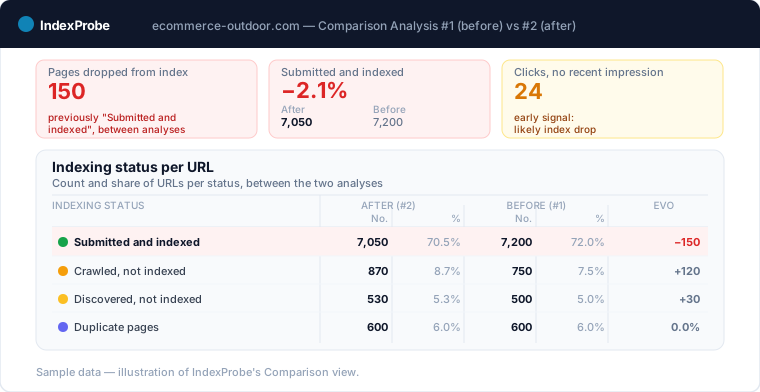
This signal doesn't read in the indexing report alone, because indexing and performance live in two separate reports. A page can stay shown as "Submitted and indexed" in an old snapshot while it has already stopped earning impressions. It's by crossing the Performance report (the pages that had clicks) with indexing (the pages that still have a recent impression) that you isolate the candidates for dropping out of the index, before the visible traffic fall.
Doing that crossing by hand, on a real site, at regular intervals, isn't sustainable: Search Console doesn't filter coverage on your URL list, and inspection runs one URL at a time. Comparing two states of your scope over time calls for a tool built for it.
💡 Monitor your strategic "Submitted and indexed" pages, verify the kept canonical at scale, and catch regressions before the traffic loss. IndexProbe inspects the URL list you provide or build from GSC, returns the official indexing verdict dated to Googlebot's last visit, and compares two analyses over time to surface the pages leaving this status. Try IndexProbe in early access →
Do you need to act on a "Submitted and indexed" page?
No for fixes, yes for monitoring. "Submitted and indexed" calls for no correction: it's the healthy status by definition. But on your strategic pages, it warrants regular follow-up, because a healthy status can degrade with no alert. The right posture isn't to fix, it's to keep an eye open.
In practice, keep the three controls: check that Google kept the right canonical, that the page is earning impressions and clicks, and that its last crawl is recent. Three simple moves to steer a healthy page, instead of merely noting it.
Earning this status is one thing; keeping it is another — index exits are silent. Index monitoring continuously verifies that your strategic pages hold their place, and alerts you at the first flip.
Frequently asked questions
What does "Submitted and indexed" mean in Search Console?
This status means two things at once: the page is in Google's index, and Google discovered it through a URL present in a sitemap you submitted. The matching inspection verdict is "URL is on Google." It's the only status in the indexing report that calls for no fix.
Does a "Submitted and indexed" page necessarily appear in Google results?
No. Being indexed makes a page eligible for results, without guaranteeing it positions there. Google confirms it: indexing doesn't guarantee appearance in results. A page can be perfectly indexed and earn no useful impression, for lack of relevance or demand for its content.
Can an indexed page be deindexed later?
Yes. Google's index isn't permanent: a page "Submitted and indexed" today can leave that status. Degraded content, weakened quality signals, a canonical shift, or a technical error are enough. Requesting a fresh crawl doesn't guarantee reindexing as long as the root causes persist.
What's the difference between "Submitted and indexed" and "Indexed, not submitted in sitemap"?
Both describe a well-indexed page. The difference is the discovery source: "Submitted and indexed" was found through a submitted sitemap, the other through a different route (link, earlier crawl). "Indexed, not submitted" isn't an alert status; if the page matters, add its URL to the sitemap.
How do I check a page is still indexed?
Inspect the URL in Search Console for the official verdict, dated to the last crawl. Watch impressions in the Performance report too: a page with clicks but no recent impression has probably left the index. Across many pages, cross this data regularly rather than case by case.
Should you act on a "Submitted and indexed" page?
No correction is needed: it's the report's healthy status. But on your strategic pages, keep tracking: did Google keep the right canonical, is the page earning impressions and clicks, is its last crawl recent. A green status can degrade with no alert, which is why monitoring matters.